At Impact Divers, we’re constantly amazed by the incredible biodiversity of Cape Town’s rocky reefs, and one group of creatures never fails to steal the show, that is the nudibranchs!
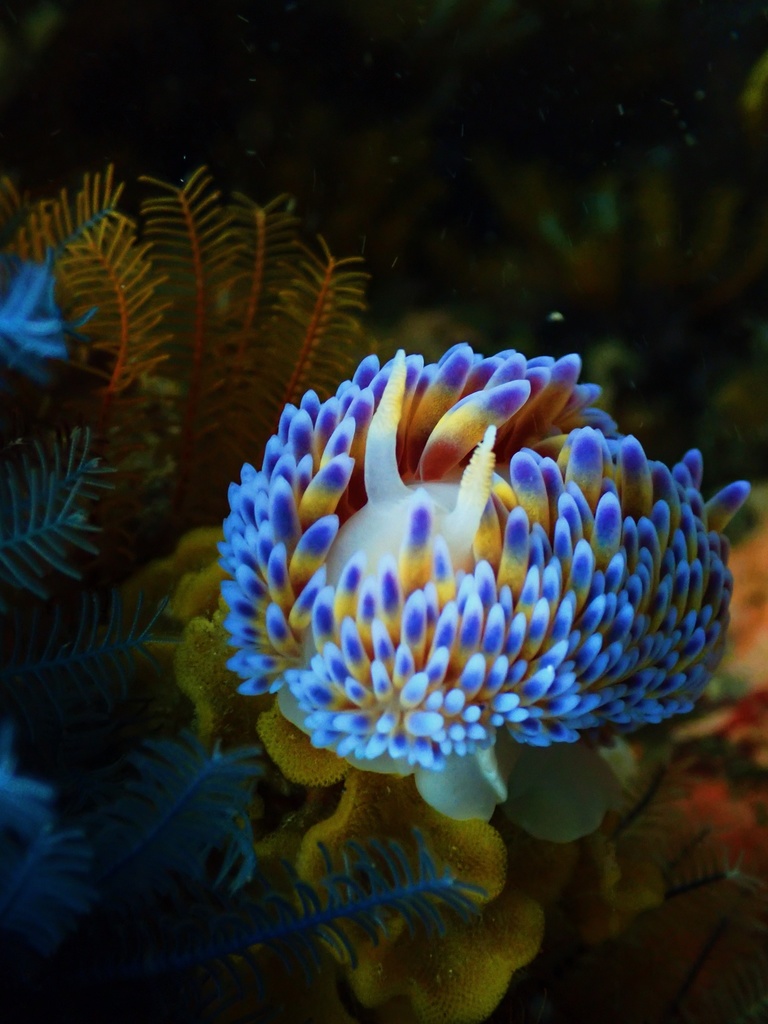
Sometimes known as the 'Sea Slugs' OR "butterflies of the sea," nudibranchs are soft-bodied, marine gastropod mollusks that come in an astonishing variety of shapes, sizes, and kaleidoscopic colours. If you’ve ever dived with us along the Cape Peninsula, chances are you've seen one of these tiny, psychedelic wonders crawling along the reef. But there's a lot more to nudibranchs than meets the eye.
What is a Nudibranch?
The word nudibranch means "naked gill" a reference to the feathery gills found on the backs of many species. Unlike other mollusks, nudibranchs have no shell in their adult form, making their soft, colourful bodies completely exposed.
They belong to a broader group of marine invertebrates and are part of the gastropod class, which also includes snails and slugs. But don’t let the “slug” comparison fool you, nudibranchs are anything but dull.
Cape Town: A Nudibranch Paradise
The cold, nutrient-rich waters of the Cape Peninsula support one of the most diverse and vibrant marine ecosystems in the world. Among rocky reefs, kelp forests, and shallow bays, nudibranchs thrive in abundance. Over 80 species have been recorded in this region, many of them endemic. With our sister marine research group Cape RADD being part of a species range extention of one species here in False Bay (SEE MORE HERE).
Whether you're exploring dive sites like A-Frame, Pyramid Rock, or Partridge Point, you're likely to encounter a range of nudibranch species on a single dive, if you know where to look.
A Colourful Cast of Characters
There are several types of nudibranchs, and each has its own unique appearance and adaptations:
🟣 Dorids
These are the classic nudibranchs, often with a smooth, oval-shaped body and a circle of feathery gills on their back. They come in bold colours and can often be found on sponges, their primary food source.
🟢 Aeolids
These are easily recognised by their numerous finger-like appendages (cerata) that cover their backs. Many aeolids feed on hydroids and are capable of incorporating their prey’s stinging cells into their own bodies for defence!
🐚 Sea Hares
Though not technically nudibranchs, sea hares are closely related and also found in our waters. They’re larger, with softer colours, and have a pair of “rabbit ear” rhinophores that give them their name. Unlike their flashier cousins, sea hares often rely on camouflage and inky defense mechanisms.
Why So Bright? Aposematism Explained
One of the most striking things about nudibranchs is their vivid coloration. These brilliant blues, oranges, purples, and yellows aren’t just for show—they serve as a warning to predators.
This is called aposematism: using bright colours to signal toxicity or foul taste. Many nudibranchs absorb toxins from their prey, such as sponges or anemones, and store them in their tissues, making themselves unpalatable or dangerous to would-be predators.
In essence, nudibranchs are saying, “Eat me if you dare!”
What Do Nudibranchs Eat?
Nudibranchs are specialist feeders, often targeting specific prey:
- Dorids typically eat sponges, sometimes those with chemical defenses they can harness for themselves.
- Aeolids eat hydroids and anemones, sometimes stealing their stinging cells (nematocysts) for protection.
- Others feed on bryozoans, tunicates, or even other nudibranchs!
Their diets are as diverse and fascinating as their appearance and that’s part of what makes spotting them such a rewarding experience.
Why Nudibranchs Matter
Beyond their beauty, nudibranchs play important roles in reef ecology and scientific research. Their specialized diets make them indicators of ecosystem health, and some species are even being studied for bioactive compounds with medical potential.
For divers, scientists, and nature-lovers alike, nudibranchs are a shining example of the ocean's hidden magic and a reminder that even the smallest creatures can be the most extraordinary.
👇 Come Find Them With Us!
#At Impact Divers, our local guides know just where to look to find these vibrant reef dwellers. Whether you're on a marine science internship with Cape RADD or just here for a fun snorkel OR dive with Impact Divers, ask us about nudibranch spotting, we’d love to share our favorites with you. We also have some funky Nudibranch stickers for SALE in our Dive Shop!